
Fraud Command
A complete suite of configurable fraud controls: real-time authorization challenges, tokenization rules, backtesting, custom code rules, and contextual risk signals.
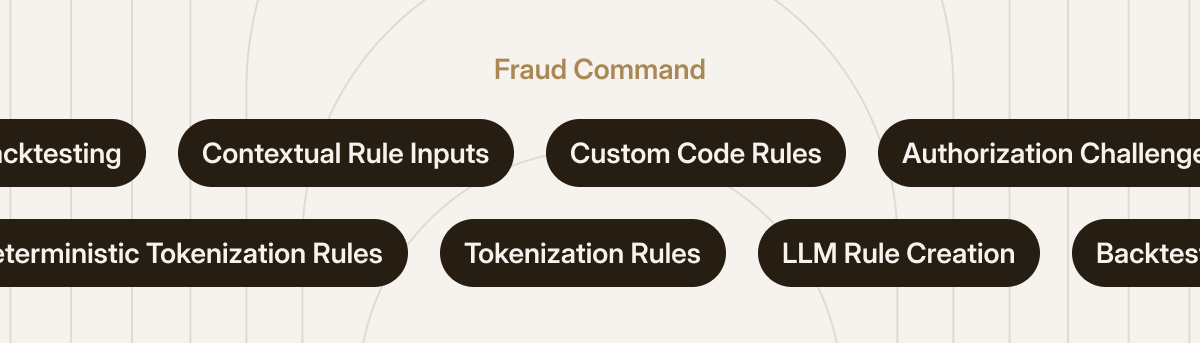
Fraud prevention that adapts to your card program, not the other way around. Every program has unique spend patterns, risk tolerances, and cardholder expectations. Fraud Command lets you define the exact fraud logic your program needs, validate it against real transaction data, and deploy with confidence, all from the Lithic dashboard.
Fraud Command is the upper of the two Authorization Rules tiers. Every Lithic program starts on Fraud Essentials, the baseline always-on layer that covers conditional action and velocity limit rules built from standard rule inputs, across card authorization, 3DS authentication, and ACH receipts, along with shadow mode and performance reports. Fraud Command includes everything in Fraud Essentials, plus the capabilities below. See Feature Tiers.
What's included
Authorization challenges

Add a real-time verification step to risky transactions instead of declining them outright. When a transaction triggers a challenge, the cardholder receives an SMS prompt to confirm or deny the purchase before the authorization is finalized. This keeps legitimate spend flowing while stopping unauthorized use.
Fraud Command includes unlimited SMS challenges at no per-message cost.
Read the authorization challenges guide
Contextual rule features
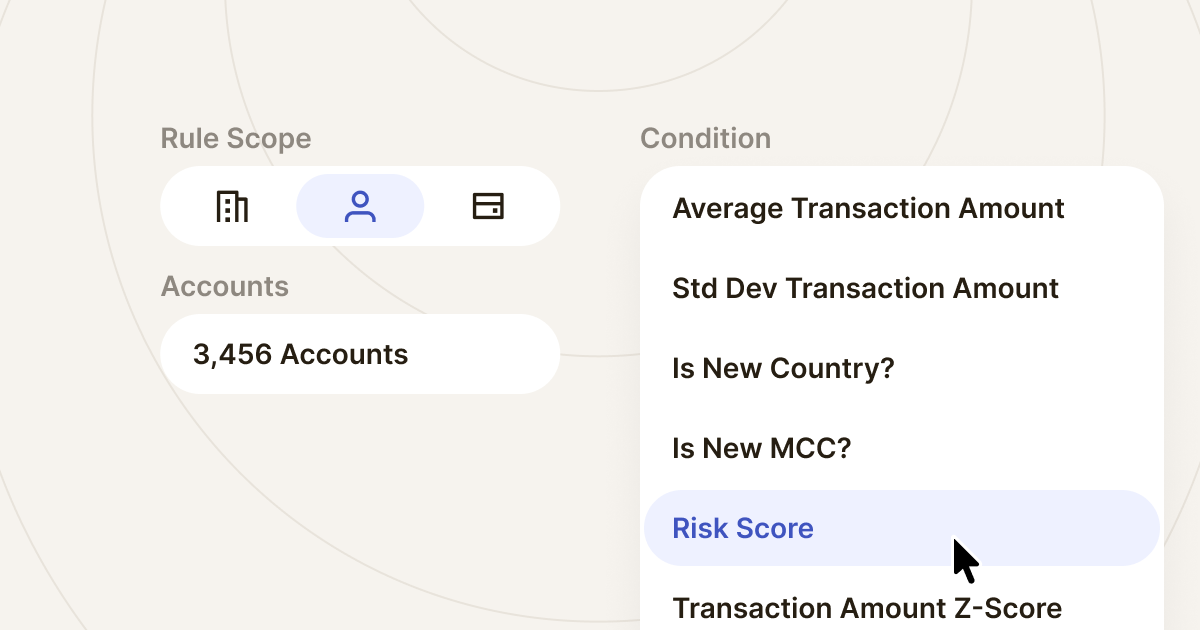
Move beyond static thresholds. Contextual features enrich your authorization rules with historical behavior data for the specific card or account, available in both standard conditional rules and custom code rules. For example: challenge a transaction if the amount exceeds 3x the card's average spend. Rules that use contextual features automatically tailor themselves per card and per cardholder, so a single program-wide rule can catch anomalous behavior without manual tuning.
Read the contextual features guide
Backtesting
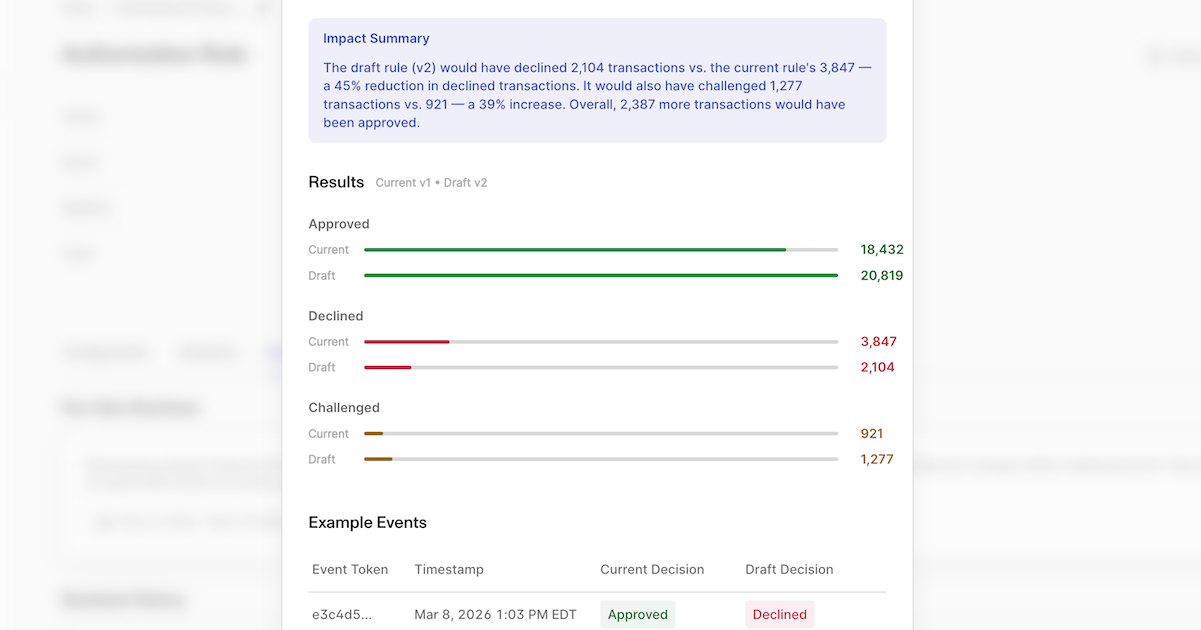
Test authorization rules against historical transaction data directly from the Lithic dashboard. Run unlimited backtests, review performance metrics and graphs, inspect example transactions, and access your full backtest history, all from the UI. Know exactly how a rule would have performed before you deploy it.
Custom code rules
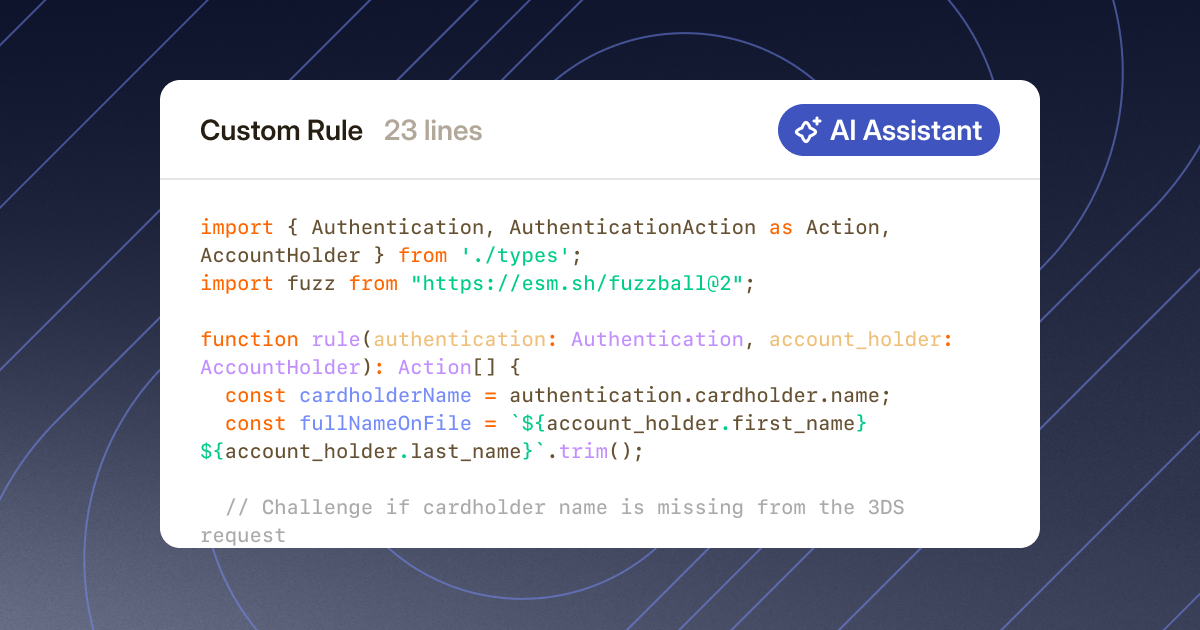
Go beyond the standard conditional_action and velocity_limit rule templates. With custom code rules, you can write arbitrary authorization logic in TypeScript and compile it to run directly on Lithic's Rules Engine. Derive custom features from existing transaction attributes, import external libraries, and define complex cascading logic. If your fraud logic can be expressed in code, you can run it on Lithic infrastructure.
Build and edit rules in the dashboard's built-in code editor with syntax highlighting, type checking, and one-click deployment.
Read the custom code rules guide
AI-assisted rule writing
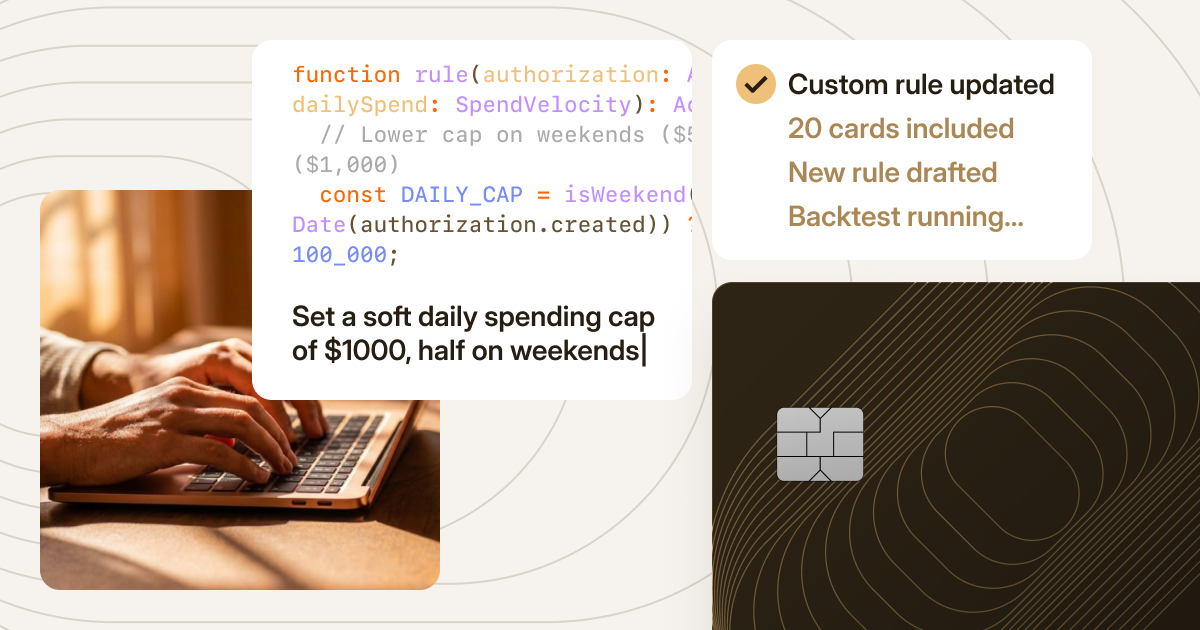
Describe the fraud rule you want in plain language and let an AI agent write the corresponding TypeScript code. For example: "Decline any transaction over $500 where the merchant country doesn't match the cardholder's country." The agent generates the rule, deploys it into safe testing mode, and runs a backtest so you can validate performance before going live. AI-assisted rule writing makes the full flexibility of custom code rules accessible to teams that prefer not to write TypeScript directly.
Tokenization rules
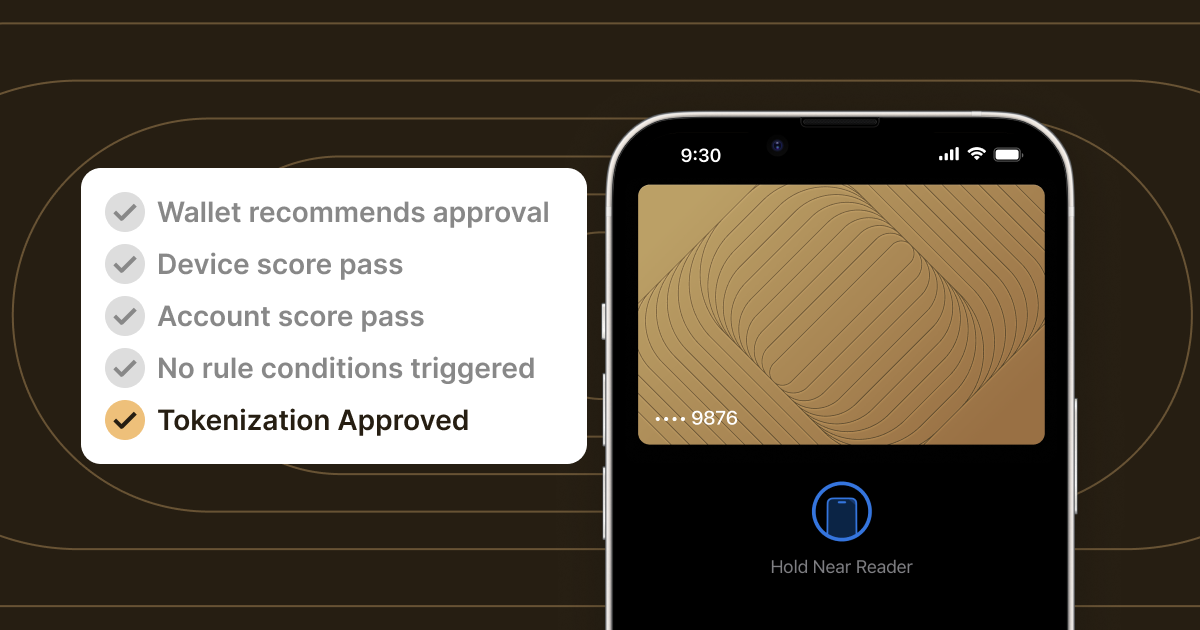
Take control of which cards can be added to digital wallets. The defaults from networks and mobile wallet providers are a strong baseline of protection, but they don't know the nuances of your program. Strengthen your defenses by applying your own logic to tokenization decisioning to prevent unrecoverable fraud and false positives.
Read the tokenization rules guide
Fraud Command rules in the Rule Library
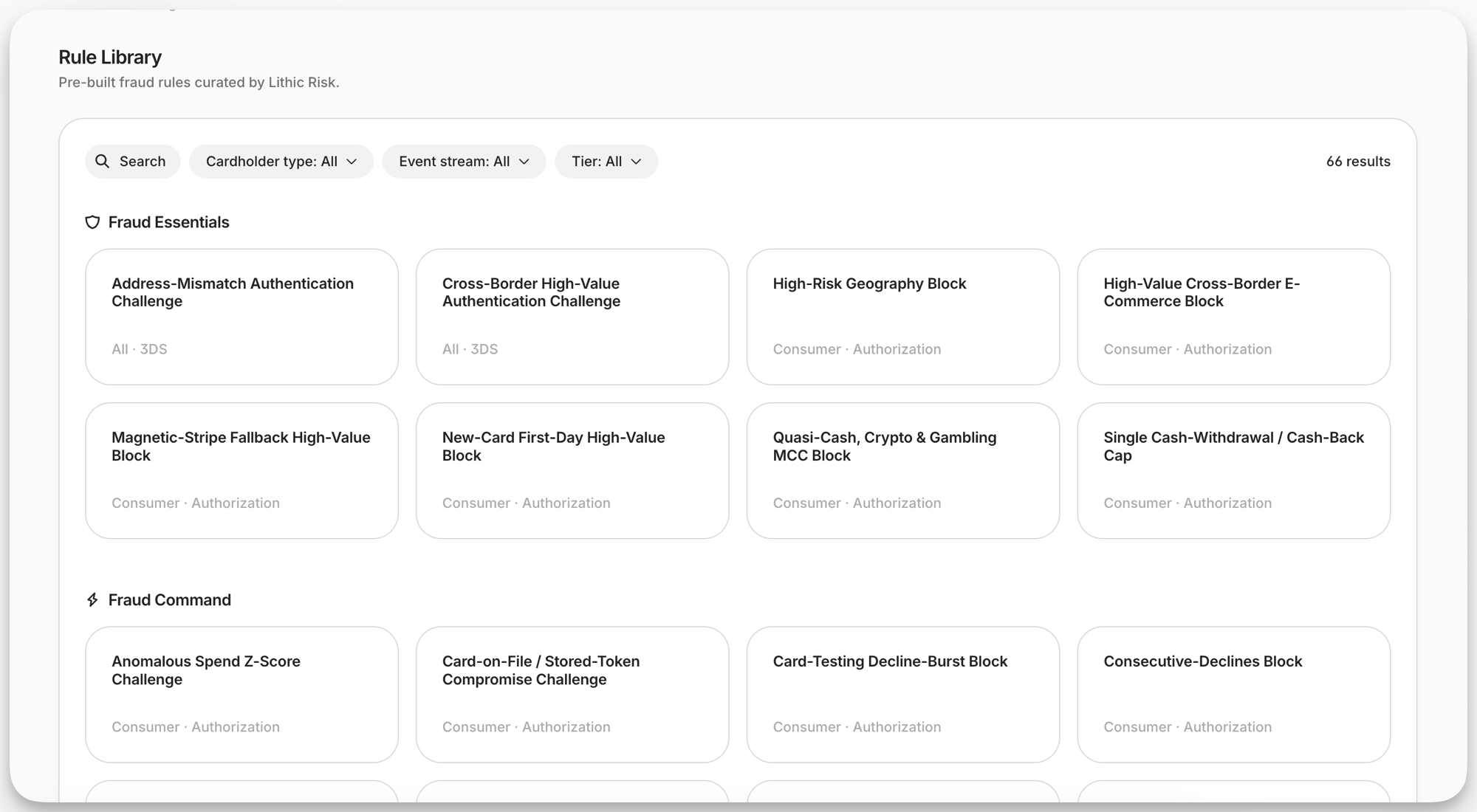
The Rule Library is a curated set of pre-built fraud rules, built and maintained by Lithic's Risk team and browsable by every Lithic program. Rules are labeled with the tier they require, and the Fraud Command ones use the capabilities above: authorization challenges, contextual features, custom code, and tokenization rules. Without the add-on, they remain readable and cannot be added to a program. Fraud Command also unlocks backtesting, which sizes a library rule's thresholds against your historical transactions and returns an impact estimate in minutes.
Coming soon
Fraud is always evolving. Lithic will continue adding new capabilities to the Fraud Command suite, with several additional features under active development.
Embedded device data collection
Lithic will provide an embeddable element you can add to your user-facing portal or mobile application to collect device metadata. This data feeds directly into the authorization rules engine, enabling rules that cross-reference user device signals with transaction details.
For example: decline a card-present transaction in New York if the cardholder just logged into their app from California.
To learn more or enable Fraud Command for your program, contact your Lithic account team.
Updated about 2 months ago